Subtotal D0.00


Email : 309
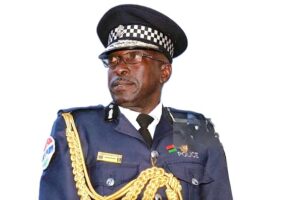
By Sanna Camara
Last week, the Office of the President in Banjul announced that former Inspector General of Police, has been rehired to head a commission into land disputes and complaints. The victim’s community, the Gambian public, and international observers paused and asked, was he not indicted for the cover up in the massacre of 56 West African migrants in 2005?
Yankuba Sonko joined Gambia Police Force in 1982. He studied at the Nigerian Police Training School in 1990 and founded the Police Intervention Unit (PIU) in 1991. Sonko was the first Public Relations Officer of the police force and commanded the Kanifing Division in 1995. He later headed the Fraud Squad in 1998 and served as Crime Management Coordinator before he was deployed on a UN mission in East Timor (1999). His first term as an Inspector General of Police (IGP) spanned from March 2010 to November 2014; and the second from July 2015 to June 2017.
According to the Truth, Reconciliation and Reparations Commission (TRRC), Sonko, along with other senior officers, played a role in concealing the truth about the massacre, which was carried out under Yahya Jammeh’s regime. Because of this, the Commission recommended that he be banned from holding public office for 10 years – a recommendation acknowledged by the Gambia government’s 2022 White Paper, which also states that further investigation was needed, citing “purported exculpatory evidence” in Sonko’s favor.
What is Exculpatory Evidence?
The phrase “exculpatory evidence” in relation to Yankuba Sonko comes from the Gambian government’s 2022 White Paper responding to the TRRC recommendations.
In this context the government’s White Paper did not immediately enforce the ban. Instead, it stated that there was “purported exculpatory evidence” in Sonko’s favor. Exculpatory evidence, as a legal term means that evidence exists that could clear someone of blame or guilt. In Sonko’s case, it suggests that some testimony or documentation may have indicated he was not directly responsible or that his role was less than what the TRRC concluded, but it remains unverified and unpublished, which is why his recent appointment as chairman of the lands commission faces fresh controversies.
Despite the government promise of a further investigation into this evidence, no public report has been released showing what that evidence was or whether it truly absolves him to date.
The Victim Led-Organisations
“This appointment raises serious questions about the Government’s commitment to justice, accountability, and the integrity of the transitional justice process following the recommendations of the Truth, Reconciliation and Reparations Commission,” a statement by the Association of Victim-Led Organisations (AVLO) said in a statement.
It laments that without transparency and accountability, Sonko’s appointment represents a breach of public trust and a dismissal of victims’ efforts in pursuit of truth and justice. It is also a dangerous precedent that undermines accountability and a direct affront to the “Never Again” commitment embraced by the Gambian people.
The group therefore calls on The Gambia to “immediately publish the full findings of any investigation” conducted into the alleged role of Yankuba Sonko in the killings of West African migrants; Clarify the legal and procedural basis upon which this appointment was made, including whether it aligns with the TRRC recommendations and the Government’s White Paper commitments; among other demands.
