Subtotal D0.00


Email : 301
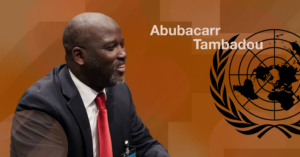
By Sanna Camara
One year ago today, the Gambian nation was gripped by shock and disbelief. A new investigative platform run by the country’s top award-winning journalist, Mustapha K. Darboe, published a groundbreaking story detailing how hundreds of millions of Dalasi worth of assets of the former president Yahya Jammeh were disposed of. At the center of it all was former Justice Minister, Abubacarr Ba Tambadou, who at the time, was vying for the position of a judge of the International Court of Justice.
The publication, The Assets of Gambia’s former dictator go for a song, caused a public uproar in the country and beyond, calling into question an entire process of an investigation exercise that costed the Gambian taxpayers tens of millions. Street protests followed, leading to arrests and detention of activists demanding accountability and transparency over the said assets’ disposal. One man who faced the backlash was the same Ba Tambadou.
Today, in Banjul, he has published an open letter to the author of the publication, demanding a public apology for what he called, a damage to his “unblemished character and professional reputation built over a 25-year legal career.”
Ba Tambadou was the coalition government’s minister of justice and attorney general for three years – te same government that later acknowledged problems in how the forfeited Jammeh-era assets were sold. It also published related disposal documents, detailing how vehicles, tractors, furniture, scrap materials, livestock (cattle), properties, shares and other items seized or identified by the Janneh Commission of inquiry.
President Adama Barrow publicly pledged full accountability and said Cabinet and oversight bodies would act on findings after a May 2025 address to the nation following the mass protests. In March 2026, a Special Select Committee of the National Assembly produced a comprehensive report into the sale and disposal of assets identified by the Janneh Commission; that report documents procedural gaps and recommendations.
In a letter circulated early this morning, former Justice Minister said by publishing an article about alleged corruption surrounding the sale of the Jammeh assets and making him a central figure in that article – to the exclusion of all other relevant facts such as the role of the Ministerial Taskforce and Cabinet – journalist Darboe had “intended, unjustifiably and maliciously, to create the public perception that I was engaged in acts of dishonesty.”
He wrote to Mustapha: “Your actions have had serious repercussions for me including instigating and whipping up local public sentiment, hostility, vile, virulent, abusive and offensive comments against me and my family,” Mr Tambadou wrote in his six-page, 2,800-word open letter.
“I instantly became the subject of public ridicule and the victim of online harassment and abuse on social media,” he added, noting that the local backlash to the Republic article, stemming from the perception that Mustapha Darboe “successfully created”, was so profoundly strong that it gave rise to public protests.
“Your actions also sought to demean my international standing in my field of work and put my character, professional reputation, and integrity in serious jeopardy. It gave rise to petitions against my candidature for ICJ judge and even led to a withdrawal by one local entity of an earlier endorsement of my ICJ candidature,” he lamented
According to Mr Tambadou, journalist Darboe’s objective was to portray him as “a dishonest person” and cause him reputational harm. He added: “You succeeded in both.”
However, Tambadou maintained that the decision taken on Jammeh’s assets was a Cabinet‑approved government policy, not a personal initiative. That the Court-appointed receiver’s mandate was not terminated. It expired. He said the appointment of Alpa Barry as receiver was “approved collectively” by the Ministerial Taskforce established by the President.
He said despite these and several other facts, the author had portrayed him alone as the decision maker in the process, acting dishonestly at the expense of the Gambian public when that was not the case. Hence a public apology is the least of what deserves from the journalist, notwithstanding his strong belief in press freedom, democracy and good governance principles.
Mustapha Darboe was not available for comments at the time of publishing this piece.
